Quick Answer
A positive group B strep (GBS) test means that GBS bacteria were found in the swab taken late in pregnancy. That is common and usually does not make you sick, but it can affect labor, because U.S. guidelines recommend IV antibiotics during labor to lower the chance of passing GBS to your baby. Whether and how that happens at a birth center depends on the center's written protocols and on your own circumstances, such as when your water breaks, how fast labor moves, and whether you have a fever.
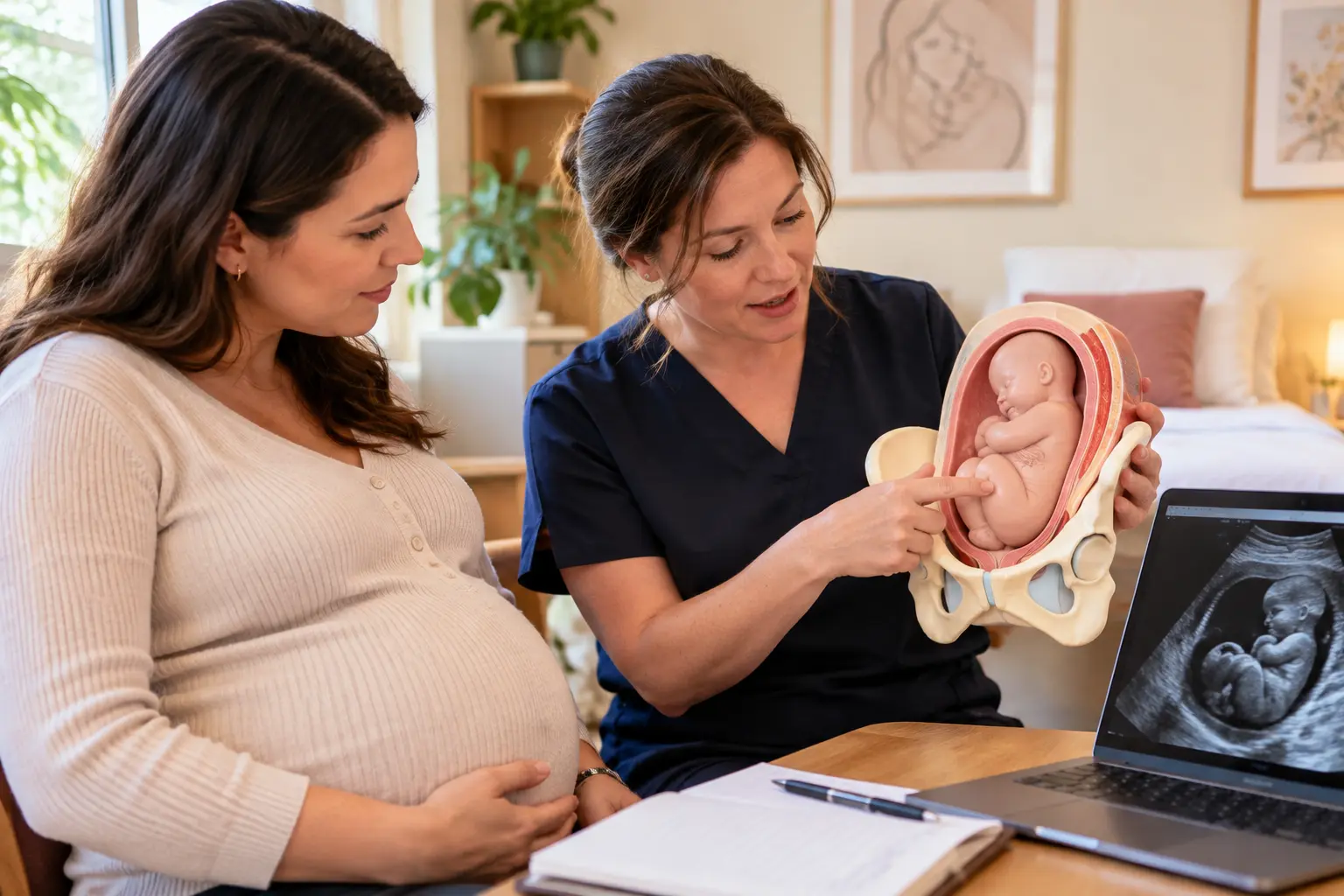
For most people, the main change guidelines recommend is IV antibiotics during labor. Knowing what to expect, and what to ask your midwife before labor, makes that plan easier to follow.
Finding out you have a GBS positive pregnancy near the end of pregnancy can feel unsettling, especially if you are planning a birth center birth. This guide explains what the result means, what changes during labor, why the timing of antibiotics matters, what happens if labor is fast or your water breaks first, how your baby is cared for after birth, and what accredited and New York birth centers are expected to do.
Key Takeaways
- About 1 in 4 pregnant people carry GBS. A positive test usually means the bacteria live in the body without causing illness, not that you have an infection.
- The concern is for the baby. About half of babies born to people who carry GBS pick up the bacteria, and without antibiotics in labor, 1 to 2% of those babies develop early-onset GBS disease.
- IV antibiotics during labor are the recommended way to lower that risk. They work best when started at least 4 hours before birth, but shorter courses still help, and needed care isn't delayed just to reach 4 hours.
- If your water breaks at term before labor starts, ACOG says GBS antibiotics should not wait for labor, and prompt induction is recommended.
- Accredited birth centers must have written GBS policies and provide treatment in line with current ACOG and AAP guidance, or document an informed refusal. Your center's protocols decide the details.
- Antibiotics in labor lower the risk of early-onset disease but do not prevent late-onset disease, so it helps to know the signs to watch for after birth.
What Does a Positive Group B Strep Test Mean?
Group B streptococcus is one of the many bacteria that live in the human body. The American College of Obstetricians and Gynecologists (ACOG) says it is most often found in the vagina and rectum, that about 1 in 4 pregnant women carry it, that it usually does not cause serious illness, and that it is not a sexually transmitted infection.
Carrying GBS without being sick is called colonization. It is different from an active GBS infection, such as a urinary tract infection. The Centers for Disease Control and Prevention (CDC) explains that most of the time the bacteria aren't harmful and don't make people feel sick. ACOG also notes that colonization can come and go: it may be intermittent, temporary, or persistent.
Because colonization can change over time, ACOG recommends testing everyone during each pregnancy between 36 weeks and 37 weeks and 6 days, using a swab of the vagina and rectum. A result from that window predicts your status at birth well for about 5 weeks. Our guide to how GBS screening fits into prenatal testing explains the test itself.
Should You Be Worried About Being GBS Positive?
It's understandable to feel worried, and the honest answer is that GBS matters but is very manageable. ACOG explains the numbers this way:
- About 50% of people who carry GBS pass the bacteria to their newborns during birth.
- Without antibiotics in labor, 1 to 2% of those newborns develop early-onset GBS disease, a serious infection such as sepsis or pneumonia in the first week of life.
- Since antibiotics in labor became standard, early-onset GBS disease has fallen by more than 80% in the United States, from 1.8 cases per 1,000 live births in the 1990s to 0.23 in 2015.
Antibiotics greatly lower the risk, but no prevention method removes it completely. That is why your care team pays attention to the timing of antibiotics in labor and to your baby after birth.
What Happens During Labor If You Are GBS Positive?
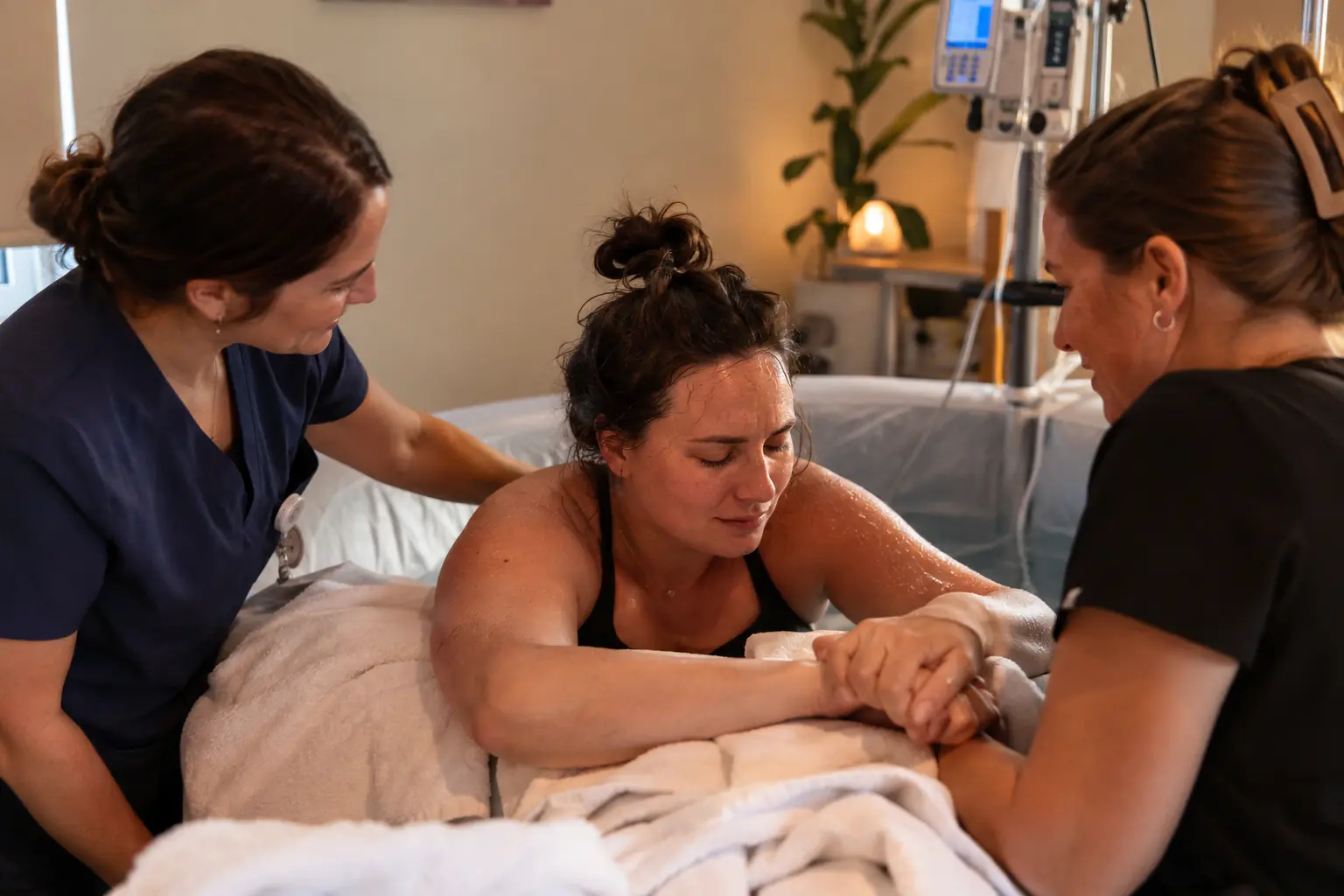
IV Antibiotics During Labor
ACOG recommends that everyone with a positive GBS screening result receive antibiotics during labor, which clinicians call intrapartum antibiotic prophylaxis. The goal is to lower the amount of GBS your baby is exposed to during birth and to get protective antibiotic levels into your baby's bloodstream.
- How they are given: through an IV. ACOG says oral or injected (intramuscular) antibiotics have not been shown to work as well.
- When they start: once you are in labor or your water has broken, so the timing is tied to your labor, not to a set week of pregnancy.
- Which medicine: ACOG names penicillin as the first choice. If you have a penicillin allergy, your care team will choose based on how severe your reaction was. ACOG notes that penicillin allergy testing is safe during pregnancy, so it helps to discuss any allergy well before labor.
Ask your midwife how the IV is placed and managed at your center, and whether it affects moving around or using water during labor.
Why Timing Matters: The 4-Hour Window
ACOG explains that antibiotics are most effective when they are started at least 4 hours before birth. In one large study, prevention worked best when antibiotics began 4 or more hours before birth, and shorter durations were less effective.
Because of this, ACOG emphasizes starting antibiotics promptly once labor begins. If you are GBS positive, ask your midwife ahead of time exactly when to call and when to come in once labor starts or your water breaks.
What If Labor Moves Quickly?
Sometimes labor moves too fast for antibiotics to run for a full 4 hours. ACOG's guidance addresses this directly:
- A shorter course is less effective than 4 or more hours, but 2 hours of antibiotics has been shown to reduce GBS bacteria levels and to lower how often newborns are diagnosed with clinical sepsis.
- Studies suggest these antibiotics reach protective levels in the amniotic fluid and the baby's cord blood within about 2 hours.
- Needed obstetric care should not be delayed only to fit in 4 hours of antibiotics.
In other words, a fast labor is not a failure of the plan, and birth is not held back to complete the antibiotics. Instead, your baby's care team takes the timing into account after birth, as explained in the section on newborn care below.
What If Your Water Breaks First?
Your GBS result matters a great deal if your water breaks before contractions begin. ACOG's guidance for people at term (37 weeks or later) who are GBS positive is that antibiotics should not be delayed while waiting for labor, and that prompt induction is recommended rather than waiting. If your water breaks before 37 weeks, care moves to the hospital, and a GBS test is taken if your result isn't already known.
For the broader picture, including how to tell if your water has broken and the warning signs to watch for, see our guide to what happens if your water breaks before labor.
What Can Change Your Labor Plan?
The table below summarizes how current U.S. guidance approaches common situations. It is a general overview, not a plan for any individual pregnancy.
| Situation | What guidance generally describes |
|---|---|
| GBS positive, labor starts at term | IV antibiotics during labor, ideally started at least 4 hours before birth (ACOG). |
| GBS positive, water breaks at term before labor | Antibiotics are not delayed while waiting for labor, and prompt induction is recommended (ACOG). |
| Labor or water breaking before 37 weeks | Hospital care. A GBS test is taken if the result isn't known, and antibiotics are commonly given (ACOG). |
| GBS status unknown at term | Antibiotics are given if risk factors are present, such as the water being broken for 18 hours or more, a fever in labor, GBS in the urine this pregnancy, or a previous baby with GBS disease. A positive result in a previous pregnancy is also a reason to consider them (ACOG). |
| Fever during labor | A fever may be a sign of infection in the uterus. ACOG says broader antibiotics are then used instead of GBS-only prevention. |
| Planned cesarean before labor, with the water not broken | GBS antibiotics are not needed for this situation, although testing is still recommended in case labor starts first (ACOG). |
Questions About Your Results?
Talk With Our Team
If you have questions about birth center care and how test results are handled before labor, the Birthing Center NYC team is here to help.
Contact UsCan You Still Give Birth at a Birth Center If You Are GBS Positive?
A positive GBS result does not by itself rule out a birth center birth. Birth centers serve healthy, low-risk, full-term pregnancies; ACOG and the Society for Maternal-Fetal Medicine describe them as providing care for "low-risk women with uncomplicated singleton term vertex pregnancies who are expected to have an uncomplicated birth." How a GBS positive result is handled is set out in each center's written protocols.
What Accredited Birth Centers Must Do
The Commission for the Accreditation of Birth Centers (CABC), which accredits birth centers including Birthing Center NYC, sets standards for GBS care. Its current indicators require accredited centers to:
- Have written policies and procedures covering GBS, including prenatal screening, care during labor, and postpartum follow-up for the parent and newborn.
- Provide GBS treatment during labor "according to current AAP/ACOG guidelines or signed refusal form."
CABC also lists as unacceptable any evidence that a birth center has started GBS prevention methods that are "not supported by current research and national guidelines." In other words, accredited centers are expected to follow current ACOG and AAP guidance for GBS.
What New York's Rules Require
New York regulates birth centers under 10 NYCRR Part 754 (birth centers run as diagnostic and treatment centers) and Part 795 (midwifery birth centers). The rules don't single out GBS, but several requirements apply directly:
- Care to accepted standards: prenatal and labor care must follow a plan of care developed according to accepted professional standards.
- IV equipment: midwifery birth centers must have emergency equipment that includes intravenous therapy equipment.
- Pediatric care: families select a pediatric provider for the baby's follow-up care, and the center must ensure immediate and ongoing pediatric care.
- Length of stay and follow-up: care at the center lasts at least 4 and at most 24 hours after birth. Part 754 centers provide home visits for parent and baby the day after discharge and on the third day, and Part 795 midwifery birth centers must have a home follow-up program for the immediate postpartum period, unless arrangements have been made for the baby to be seen by another provider.
You can read more about New York's birth center rules in our licensing guide, and about how birth center eligibility is assessed during pregnancy and labor.
When Hospital Care May Be Needed
Being GBS positive alone does not usually mean transfer. Some situations that can come up around GBS do call for hospital care, sometimes as a planned move and sometimes urgently:
- Preterm labor or water breaking before 37 weeks. Birth centers care for term pregnancies, and ACOG advises calling right away or going to the hospital for signs of preterm labor.
- A fever or other signs of infection in labor. ACOG says suspected infection is treated with broader antibiotics, and New York's midwifery birth center rules require a transfer when risks are identified.
- A recommended induction with medication. If your water breaks at term and an induction with medication is recommended, it happens in a hospital, because New York birth centers may not start or speed up labor with medications that act directly on the uterus.
A move to the hospital doesn't have to mean a new team. Birthing Center NYC states that its midwives also attend planned hospital births at an affiliated hospital; you can learn more about planned hospital birth with your own midwives.
What If Your GBS Status Is Unknown?
Sometimes labor begins before the test is done or before the result is back. ACOG says that antibiotics are then recommended if certain risk factors are present:
- Labor or water breaking before 37 weeks
- Water broken for 18 hours or more at term
- A fever of 100.4°F (38°C) or higher during labor
- GBS found in a urine test at any point during this pregnancy, or a previous baby who had GBS disease
ACOG adds that people who tested positive for GBS in a previous pregnancy have about a 50% chance of carrying it again, so antibiotics in labor should also be considered for them at term when this pregnancy's result is unknown. Some settings can run a rapid GBS test at the start of labor. Ask your midwife what happens if your result isn't available.
What Happens After Your Baby Is Born?
Early-onset GBS disease appears within the first 7 days after birth, and ACOG notes it most often shows up within the first 12 to 48 hours. That is why your baby's care team pays close attention in the first days.
Newborn care is guided by the American Academy of Pediatrics (AAP), and the details depend on how far along the pregnancy was, how long antibiotics ran before birth, and how your baby is doing. According to a summary of the AAP's 2019 guidance, well-appearing babies born after insufficient antibiotics in labor are monitored for 36 to 48 hours, and babies who are unwell at birth or develop signs of illness are treated with antibiotics.
Because New York birth centers discharge families within 24 hours of birth, it's worth asking before labor how your baby's monitoring and follow-up would be arranged if antibiotics ran for less than 4 hours, including home visits and when your baby would see the pediatric provider you have chosen. You can also read about newborn exams and care after birth.
Call Your Baby's Provider Right Away If You Notice
Antibiotics in labor help prevent early-onset disease but do not prevent late-onset GBS disease, which ACOG says can appear from about a week to a few months after birth. ACOG and the AAP advise contacting your baby's health care provider right away for signs such as:
- Fever
- Poor feeding or feeding difficulties
- Unusual sleepiness or lack of energy
- Irritability
If your baby seems seriously ill, call 911.
What GBS Positive Does Not Mean
- It does not mean you are sick. Most people who carry GBS have no symptoms, and colonization is different from infection.
- It is not a sexually transmitted infection, according to ACOG. GBS is one of the many bacteria that live in the body.
- It does not automatically mean a cesarean. ACOG's prevention approach is antibiotics during labor. It describes a cesarean before labor, with intact membranes, only as a situation in which those antibiotics aren't needed.
- It does not mean other remedies can replace IV antibiotics. ACOG says oral and injected regimens have not been shown to work as well, and that vaginal washing with chlorhexidine during labor has not reduced newborn sepsis in randomized trials. CABC treats prevention methods without research support as unacceptable at accredited birth centers.
Planning Your Birth?
Talk Through Your Options
A consultation is a chance to ask how our midwives plan for a positive GBS result, how eligibility is assessed, and how hospital care is coordinated if it's needed.
Schedule a ConsultationQuestions to Ask Your Midwife Before Labor
- What is my GBS result, and when was the swab taken?
- How does the birth center give antibiotics in labor, and can I move around or use water with an IV in place?
- When should I call and come in once labor starts, so antibiotics can begin early?
- What happens if my water breaks before labor starts?
- What is the plan if labor is very fast?
- I have a penicillin allergy. What will be used instead, and should I be tested?
- Which situations would mean moving my care to the hospital?
- How will my baby be monitored after birth, and how are home visits and pediatric follow-up arranged?
- If I'm considering declining antibiotics, what are the risks for my baby, and what would that mean for newborn care?
Frequently Asked Questions
What happens if I test positive for group B strep?
The main change comes during labor. ACOG recommends IV antibiotics during labor for everyone with a positive GBS screening result, to lower the chance of passing the bacteria to the baby. Your midwife will talk with you about when to come in once labor starts and what happens if your water breaks first.
Should I be worried if I'm GBS positive?
It's normal to have questions, but a positive result is common, affecting about 1 in 4 pregnant people. It usually means the bacteria are present without causing illness. With antibiotics in labor, early-onset GBS disease in newborns has fallen by more than 80% in the United States, although no approach removes the risk completely.
Do I need antibiotics during labor if I'm GBS positive?
Current U.S. guidelines from ACOG, endorsed by the AAP and the American College of Nurse-Midwives, recommend IV antibiotics during labor for anyone who tests positive. The one exception they describe is a cesarean birth before labor starts and before the water breaks. Decisions about your care are made with your midwife.
What happens if labor starts before I get antibiotics?
Antibiotics are started as soon as possible. ACOG says 4 or more hours works best, but even 2 hours lowers GBS levels and the rate of newborn sepsis diagnoses, and needed care isn't delayed to reach 4 hours. Your baby's care team takes the timing into account and may monitor your baby more closely after birth.
Can I still have a birth center birth if I'm GBS positive?
It can be, if you are otherwise eligible. Accredited birth centers must provide GBS treatment during labor in line with current ACOG and AAP guidance. Situations such as preterm labor, a fever, or a recommended induction with medication may lead to hospital care. Your midwife can explain your center's protocols.
Can I have a natural birth if I'm GBS positive?
The main change a positive GBS result brings is IV antibiotics during labor. ACOG's guidance does not call for a cesarean because of GBS. Ask your midwife how the IV is managed at your center and how it fits with the rest of your birth plan.
Does group B strep go away?
It can. ACOG notes that colonization may be intermittent, temporary, or persistent, which is why testing is repeated in every pregnancy at 36 to 37 weeks.
Is group B strep contagious to my partner?
ACOG states that GBS is not a sexually transmitted infection, and it is one of the many bacteria that commonly live in the body. Testing and prevention guidance focus on protecting the newborn during birth.
Will my baby need antibiotics after birth?
Not necessarily. Many babies are simply observed. Under AAP guidance, babies who are unwell at birth or develop signs of illness receive antibiotics, and well-appearing babies born after insufficient antibiotics in labor are monitored closely. Your baby's provider will decide based on how your baby is doing.
What if I decline antibiotics?
That is your decision to discuss with your midwife. CABC standards allow accredited birth centers to document an informed refusal. Without antibiotics, the risk of early-onset GBS disease for your baby is higher, and newborn monitoring guidance is based on whether antibiotics were given, so ask how declining would affect your baby's care after birth.
Still Exploring Your Options?
Visit the Birth Center
See the space, meet the team, and ask your questions about prenatal testing, labor, and how care is planned along the way.
Schedule a TourTaking the Next Step
A positive GBS result is common, and the main change guidelines recommend is IV antibiotics, started as early in labor as possible. Talk with your midwife before labor about when to come in, what happens if your water breaks or labor is fast, and how your baby will be cared for after birth, so you can head into labor with a clear plan.
Sources and References
- Prevention of Group B Streptococcal Early-Onset Disease in Newborns, Committee Opinion No. 797. American College of Obstetricians and Gynecologists, 2020, reaffirmed 2025.
- Group B Strep and Pregnancy. American College of Obstetricians and Gynecologists, last reviewed April 2025.
- Prelabor Rupture of Membranes, Practice Bulletin No. 217. American College of Obstetricians and Gynecologists, 2020, reaffirmed 2026.
- Preterm Labor and Birth. American College of Obstetricians and Gynecologists, last reviewed January 2026.
- Levels of Maternal Care, Obstetric Care Consensus No. 9. American College of Obstetricians and Gynecologists and Society for Maternal-Fetal Medicine.
- Puopolo KM, Lynfield R, Cummings JJ. Management of Infants at Risk for Group B Streptococcal Disease. American Academy of Pediatrics clinical report, Pediatrics, 2019.
- Group B Streptococcus Disease: AAP Updates Guidelines for the Management of At-Risk Infants. American Family Physician, March 2020.
- Group B Streptococcal Infections. American Academy of Pediatrics, HealthyChildren.org.
- About Group B Strep Disease. Centers for Disease Control and Prevention.
- Indicators of Compliance with Standards for Birth Centers, Reference Edition 2.3. Commission for the Accreditation of Birth Centers (public copy posted by the Nevada Division of Public and Behavioral Health), effective September 2023.
- Find Accredited Birth Centers. Commission for the Accreditation of Birth Centers.
- 10 NYCRR 754.3, 754.7, 795.3, 795.4, 795.7, and 795.10. New York State Department of Health regulations.
About the Author
Igel Cudiera
Igel Cudiera wrote this article for Birthing Center NYC. It draws on guidance from the American College of Obstetricians and Gynecologists, the American Academy of Pediatrics, the Centers for Disease Control and Prevention, the Commission for the Accreditation of Birth Centers, New York State regulations, and the other sources listed above. It is an educational summary of published clinical guidelines, last checked against those sources in October 2026, and it has not been individually reviewed by a clinician.
This content is intended for general educational purposes only and is not medical advice. It does not replace an assessment by your midwife, doctor, or your baby's health care provider. In an emergency, call 911.